Things to See & Do in Michigan
Shankar's International Children's Competition (SICC)
K. Shankar Pillai (July 31, 1902–December 26, 1989) was a famous cartoonist. He brought out a political magazine called ‘Shankar’s Weekly’. Under the auspices of this magazine, a competition called the Shankar’s International Children’s Competition was organized in 1949. It invited paintings and writings from children in India. Children sent about 3,000 entries. The following year the competition was thrown open to children from all over the world.
Today, the competition has grown and about 1,60,000 entries are received from over 130 countries. The entries are judged by an international jury. The prizewinning entries are compiled in a volume called the ‘Shankar’s Children’s Art Number’. The competition is open to children all over the world below the age of 16 years. There is no entry fee and competitors are free to choose the theme/subject they are interested in, or like most, for their paintings/ drawings/writings.
SOS Children's Villages - USA Family Dinner Time Art Contest
The Family Dinner Time Art Contest celebrates family dinner time and kicks off on Thanksgiving each year. Children may submit artwork of their family at dinner time to win a home computer. Artwork can be in any form, but must illustrate a family eating together. For sculptures and other difficult-to-ship items, please send a photo as opposed to the actual artwork.
A winner will be selected from each age group: preschool ages 1-7; grade school ages 8-12; and high school ages 13 -17.
Urban Institute for Contemporary Arts
The Urban Institute for Contemporary Arts in Grand Rapids offers art exhibits and performing arts events.
Teaching Tips & Ideas
Masterpiece Art Instruction
Masterpiece Art Instruction offers a free newsletter, "Teach Art at Home," along with free projects and lessons, art instruction CDs, and more
How I Teach a Large Family in a Relaxed, Classical Way: Fine Arts
Ideas for incorporating fine art education into a large homeschool family curriculum.
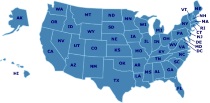
Looking for Another State?
Featured Resources
As an Amazon Associate, we earn from qualifying purchases. We get commissions for purchases made through links on this site.

Montessori: A Modern Approach
Montessori: A Modern Approach has been called the single best book for anyone -- educator, childcare professional, and especially parent -- seeking answers to the questions: What is the Montessori method? Are its revolutionary ideas about early childhood education relevant to today's world? And most important, especially for today's dual-career couples. Is a Montessori education right for my child?Paula Polk Lillard writes both as a trained educators and as a concerned parent -- she has many yea...

Handbook of Nature Study
A matchless handbook for decades, this classic work has been the natural history bible for countless teachers and others who seek information about their environment. Written originally for those elementary school teachers who knew little of common plants and animals, and even less about the earth beneath their feet and the skies overhead, this book is for the most part as valid and helpful today as it was when first written in 1911―and revised in the spirit of its authors by a group of naturali...

Secret of Childhood
Maria Montessori describes the child with warmth and the exactness of a scientist. She also discusses the array of materials and techniques needed to release his learning potential.

Kids' Poems (Grades 1)
Regie Routman shares her delightful selection of free verse poems written by first graders that will inspire your second graders to think, I can write poems like this too! Regie provides strategies for using kids' poems as models to guide children to write poems about things they know and care about: learning to skate, disliking asparagus, playing with a best friend, and more. She describes the way she invites children to study the model poem, beginning by asking kids, What do you notice? She sh...

More Charlotte Mason Education: A Home Schooling How-To Manual
After providing an important work in explaining the Charlotte Mason method for homeschoolers, Catherine Levison goes deeper into the use of this method in the home with her subsequent work. This book expands the information from the first book and offers ideas to incorporate the rich and uplifting philosophy into your home education. There are specific tips for high school, schooling through challenges, and more.